The best choice
for river and sea transport
Conventional river transport
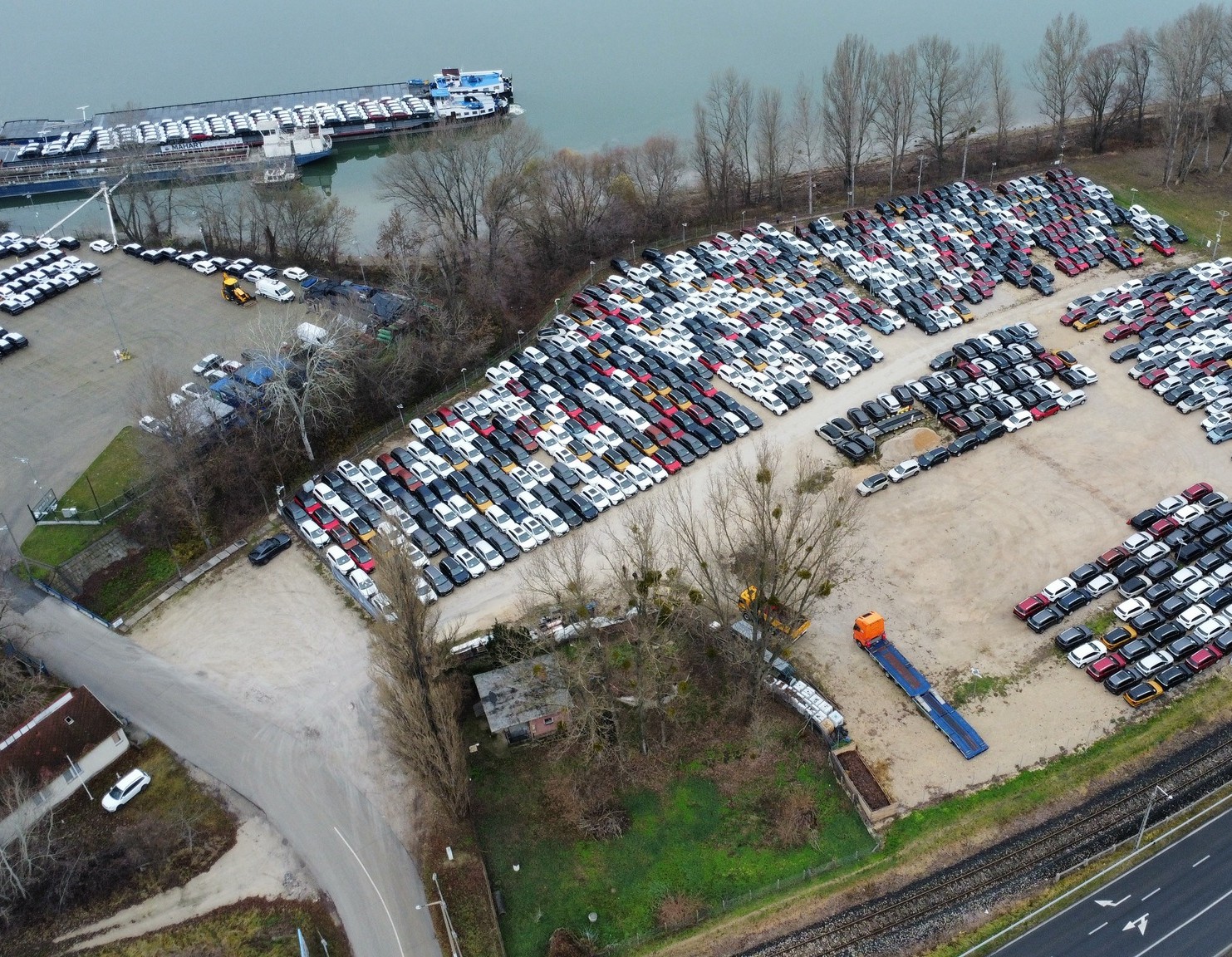
We undertake the transport of bulk, oversized and overweight consignments, handling of general cargo in Europe by river and sometimes by sea. In Deggendorf and Nyergesújfalu, we have our own RO-RO port.
Our sevices:
- handling of goods in port
- organising river or sea transport, rail and road transport to and from ports
The RO-RO port of Nyergesújfalu
A Nyergesújfalun működő úszóműves RO-RO kikötő a Duna vízállásától függetlenül tudja biztosítani a személygépjárművek és a 12 tonna alatti haszongépjárművek be és kirakodását és a professzionális ro-ro szállítmányozást.
The total area of the port is 33.000m2, of which 17.500m2 is solid storage area. The area is equipped with energy-saving street lighting and a closed fence. A 60m2 office building provides administrative services for the port.
Facilities provided by the port
The main function of the RO-RO port is to provide the loading and unloading of vehicles onto and from ships. Its dimensions make it suitable for the transhipment of passenger vehicles, lorries up to 12 tonnes, agricultural machinery not exceeding the road gauge and construction machinery with rubber tyres and tyre treads. With limited use of a mobile crane, it is suitable for general cargo, oversized - oversized goods The storage area of the port is suitable for the storage of vehicles, tools and machinery awaiting loading and unloading in an open area with paving.
Port machineries
A kikötő rendelkezik minden olyan eszközzel, hómaróval, sózó géppel, hóekével, amely a téli időszakban is tudja biztosítani a területen a zavartalan működést és a problémamentes ro-ro szállítmányozást. Az üzemképtelen járművek, nem mozgóképes gépek vontatására egy front és hátsó hidraulikával ellátott 120LE vontató, emelésre két darab 2,5 és 5 tonna teherbírású targonca áll rendelkezésre. A járművek ro-ro szállítmányozásához csoporton belül tudunk normál járműszállító gépjárművet és akár túl méretes és túlsúlyos feladatok ellátására közúti gépjárműveket biztosítani.
Operational data
- Location: on the 1.735 fkm section of the Danube
- Area of the boat station: 33.000 m2
- Coastline: 350 m of direct Danube water area
- Ports: 1 port for RO-RO cargo and passenger vessels
- Berth: 1 floating berth
- Lighting: street lighting
- Opening hours: 24 hours a day, 7 days a week
- Loading hours: 24 hours a day, 7 days a week
- Number of berths: currently 1
- Average water depth: min. 4 metres
- Low water level: 2,5 metres
- Winter ice barrier: none
- Distances: North Sea/Rotterdam - 1.095 rkm; Black Sea - 1.735 rkm; Budapest - 85 rkm;
- Development potential
More useful information

Maritime freight transport is the backbone of global trade. A significant part of world trade takes place by sea, and maritime transport is a cost-effective, reliable and high-capacity way to move goods. Maritime freight transport allows goods to be moved economically over long distances and contributes to the smooth functioning of international trade. Maritime transport plays a key role in industries such as oil and gas, agriculture, mining and manufacturing.
Maritime transport is the world's largest volume mode of transport. Around 90% of goods are transported by sea, which offers significant cost savings compared to other modes of transport. Sea freight is particularly efficient for transporting large volumes of heavy and bulky goods such as raw materials, oil, coal, grain or heavy machinery. International transport of heavy machinery is also often carried by sea, as the larger transport capacity and lower costs are an advantage for this type of goods.
However, maritime transport also has its challenges. Maritime transport is heavily influenced by weather conditions, port congestion and international customs rules. In maritime transport, goods are often used in several modes of transport, for example in combination with road or rail transport. The coordination of such combined transport modes poses serious logistical challenges.
River transport and inland waterways also play an important role in the transport of goods, especially in regions where rivers and canals provide well-developed waterways. River transport is particularly efficient in countries with abundant waterways, such as the United States, China, or several European Union Member States. River transport is more environmentally friendly, as the use of waterways significantly reduces the environmental impact and fuel consumption of transport.
The combination of river and sea freight transport offers the possibility to transport goods more easily and quickly, especially between ports and inland waterway terminals. This method allows direct access of goods to internal markets, minimising the need for road or rail transport. These forms of freight transport often use a combination of different modes to ensure optimal routes and costs.
Inland waterway freight transport has both economic and environmental benefits. Inland waterway transport uses less energy and produces fewer carbon emissions than road or rail transport. River freight is particularly important for the transport of products such as agricultural goods, minerals and heavy machinery. In addition, inland waterway freight transport offers the possibility of direct access to internal markets, reducing the need for road transport and thus congestion.
Ro-Ro (roll-on/roll-off) transport is another popular method of transporting cars, trucks and other vehicles by sea and river. RO-RO vessels allow vehicles to be moved on their own wheels to and from the ship, allowing faster and more efficient loading and unloading. This is particularly useful for international car transport and specialised transport tasks such as international heavy machinery transport.
The future of waterborne transport depends to a large extent on innovation and sustainability. Lower fuel consumption, environmentally friendly shipping technologies and more efficient logistics solutions will help to ensure that maritime and river transport continue to play a prominent role in freight transport. International organisations and governments are continuously working to modernise ports and waterways and to promote the use of environmentally friendly technologies in order to improve maritime and river transport.
A nehéz és nagyméretű gépek, mint például ipari berendezések, építőipari gépek vagy energetikai eszközök, különleges kezelést igényelnek. A tengeri szállítmányozás és a folyami fuvarozás különösen alkalmas az ilyen típusú áruk szállítására, mivel nagy kapacitású szállítóeszközökkel és kikötői berendezésekkel rendelkezik. A nemzetközi nehézgép szállítás során figyelembe kell venni a célországok különböző jogi és vámügyi szabályait, valamint az áruk megfelelő rögzítését és biztosítását a szállítás során. Ha szeretné a tengeri árufuvarozást több évtizedes tapasztalattal rendelkező, professzionális cégre bízni, akkor keressen minket bizalommal.
A folyami és tengeri szállítmányozás fenntarthatósága egyre nagyobb figyelmet kap a globális szállítmányozási iparban. Az alacsonyabb szén-dioxid-kibocsátás, az alacsonyabb energiafelhasználás és a kisebb környezeti hatás mind hozzájárulnak ahhoz, hogy a folyami és tengeri szállítmányozás egyre vonzóbb legyen a környezettudatos vállalatok számára. Az innováció és a zöld technológiák, mint például a hibrid hajtású hajók, az alternatív üzemanyagok és a digitális logisztikai megoldások, tovább javítják a vízi szállítmányozás fenntarthatóságát.